
Understanding the Role of Microcontrollers in Automotive and EV Charging Systems
Understanding the Role of Microcontrollers in Automotive and EV Charging Systems
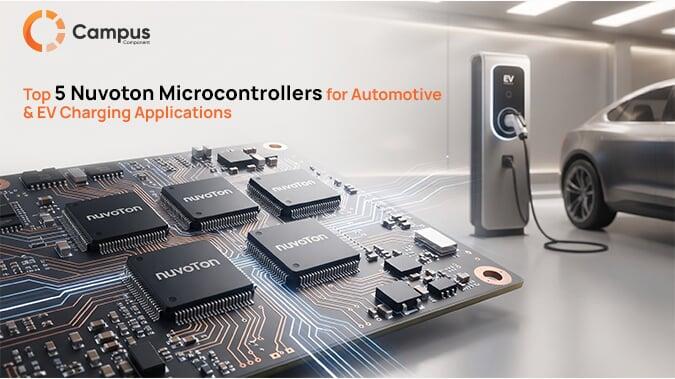
A microcontroller is essentially the control centre of an embedded electronic system. It receives information from sensors, processes that data, executes programmed control logic, and communicates with other devices or system components.
In automotive electronics, an automotive microcontroller can support functions such as sensor monitoring, body electronics, motor-related control, diagnostics, communication, and accessory management. An EV charging controller oversees the charging process and coordinates the key functions of the system. It keeps track of operating conditions, controls the required interfaces, and enables communication between different components of the charging system.
An MCU for electric vehicles or charging equipment needs:
ADCs for measuring voltage, current, and sensor signals
PWM channels for control functions
Timers for precise real-time operations
UART, SPI, I²C, CAN, or USB interfaces where required
Sufficient Flash and SRAM for application firmware
Security and firmware-protection features
Suitable voltage and temperature ranges
These requirements form the foundation of embedded systems for automotive applications and EV charging equipment.
5 Nuvoton MCU Options for EV Charging and Automotive Designs
The following five families represent different combinations of security, processing performance, peripheral integration, and power efficiency. They should be treated as candidates for evaluation rather than a verified ranking of automotive-qualified MCUs.
1. Nuvoton NuMicro M2351 Series
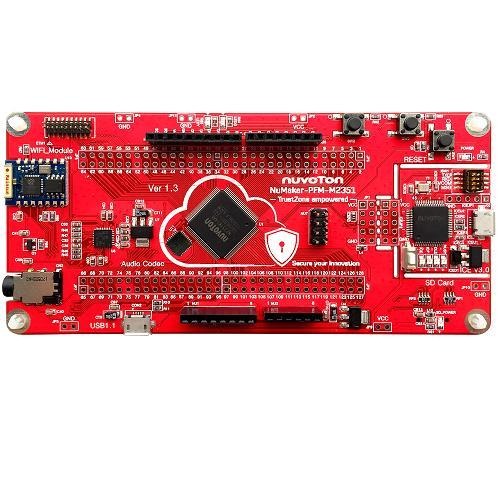
The Nuvoton M2351 MCU is built around an Arm Cortex-M23 core with TrustZone for Armv8-M. It supports security-focused features such as secure boot, memory protection, hardware cryptographic acceleration, and secure OTA firmware updates.
This makes the M2351 worth considering when connected equipment requires stronger firmware and data protection. For an EV charger, these capabilities are relevant to secure communication, firmware management, and protection of sensitive system functions.
However, the M2351 is primarily positioned by Nuvoton as a secure MCU for connected IoT applications, so its suitability for an automotive system should be assessed against the application's qualification and environmental requirements.
2. Nuvoton NuMicro M031 Series
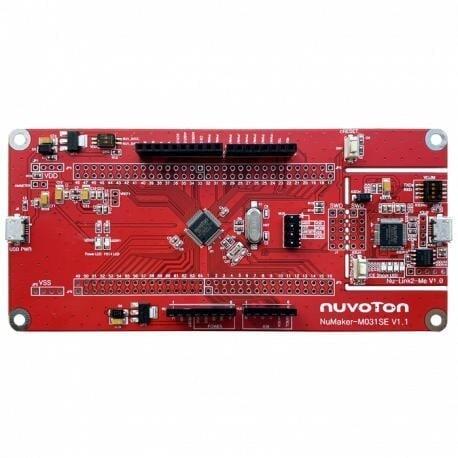
The Nuvoton M031 microcontroller is based on an Arm Cortex-M0 core and is designed for low-voltage embedded applications. Depending on the specific device, the family offers ADC, PWM, timers, UART, SPI, I²C, and other peripheral options.
Its combination of processing capability and integrated peripherals makes the M031 useful for embedded control applications where the system does not require the resources of a higher-performance MCU. It can be considered for auxiliary control, sensor monitoring, interface management, and other cost-conscious designs.
For automotive or EV-related projects, engineers should check the exact M031 device's temperature range, memory, peripheral configuration, and qualification status before using it in the final design.
3. Nuvoton NuMicro M251 Series
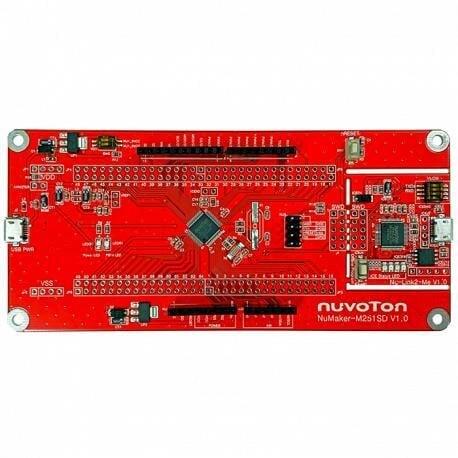
The Nuvoton M251 MCU uses an Arm Cortex-M23 core and combines low-power operation with a broad selection of interfaces and analog peripherals. The family supports features including ADC, PWM, UART, SPI, I²C, RTC, and programmable serial interfaces.
Its security mechanisms, including Flash protection, XOM, MPU, and tamper detection, can be useful when firmware and device integrity matter. This makes the M251 a potential secure embedded controller for connected equipment, monitoring functions, and selected automotive electronics MCU applications.
The family is industrial-grade rather than a blanket automotive-qualified platform, so exact device qualification must be checked before automotive deployment.
4. Nuvoton NuMicro M480 Series
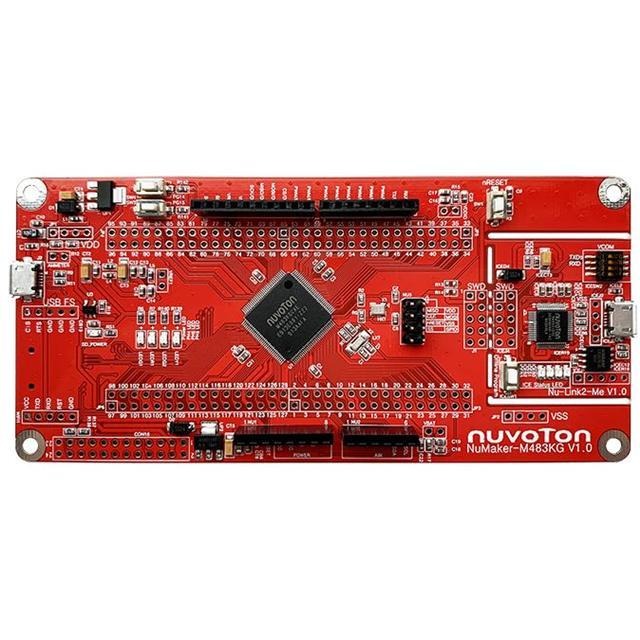
For designs that require more processing capability, the Nuvoton M480 MCU family is based on Arm Cortex-M4F and can operate at up to 192 MHz. It includes DSP and floating-point capabilities, along with options supporting CAN 2.0B, UART, SPI, I²C, USB, PWM, and other interfaces.
This makes the M480 particularly interesting for higher-performance embedded control, data acquisition, communication, and control logic. In an EV charging system, a suitable M480 configuration supports an EV charger control subsystem where higher processing performance and multiple interfaces are required.
Again, the selected part must be evaluated against the environmental, reliability, and qualification requirements of the intended application.
5. Nuvoton NuMicro M2L31 Series
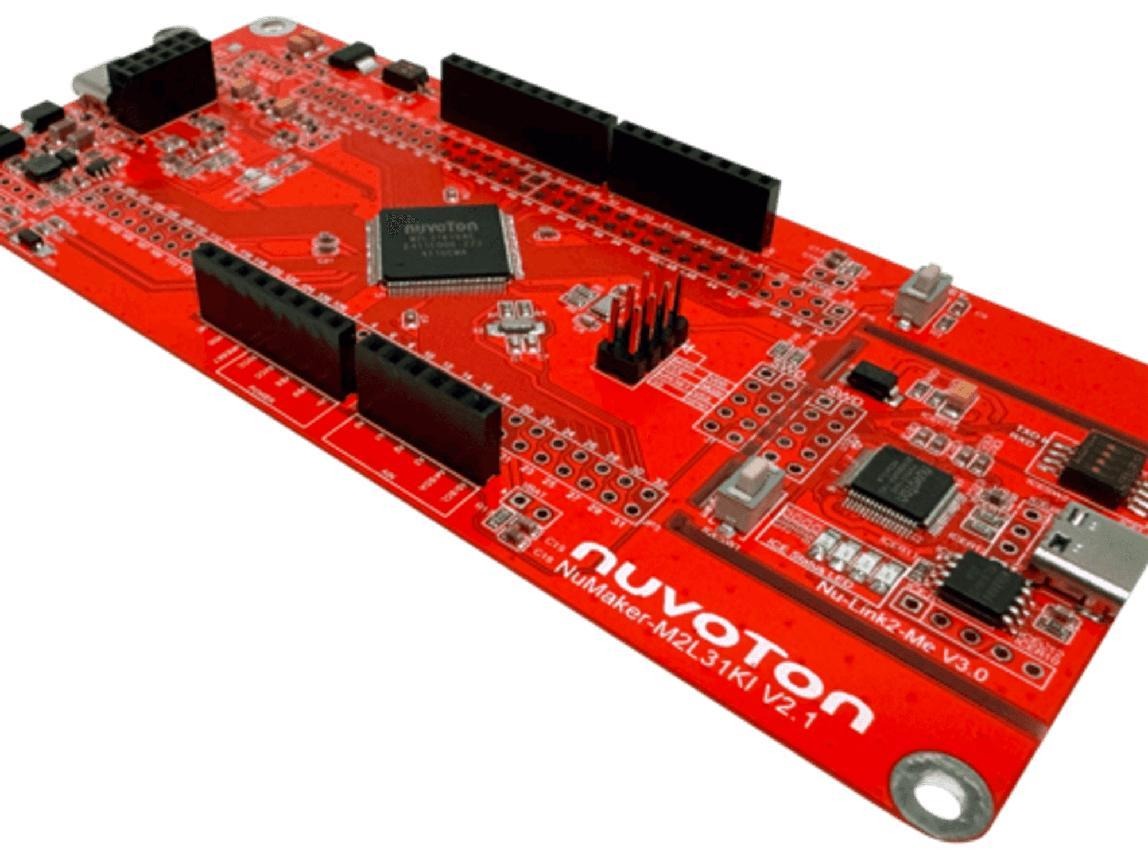
The Nuvoton M2L31 MCU is based on Arm Cortex-M23 and focuses strongly on low-power operation. It can run at up to 72 MHz and offers ReRAM, SRAM, ADC, PWM, communication interfaces, RTC, and low-power operating modes.
The family is especially interesting where energy-efficient operation and sensor processing are important. Nuvoton also lists battery management systems among its target applications, making the M2L31 relevant for certain auxiliary automotive electronics and charging-system monitoring functions.
Its low-power architecture makes it a useful option to evaluate as a low-power microcontroller or automotive embedded controller where the system requirements match its capabilities.
Key Features to Evaluate When Choosing a Nuvoton MCU
Choosing an MCU should begin with the application's actual requirements rather than clock speed alone. When comparing Nuvoton MCU specifications, consider:
Processing and memory: Check the core architecture, clock speed, Flash, and SRAM against firmware requirements.
Control peripherals: ADCs, PWM channels, timers, DACs, and comparators can influence how much external circuitry is required.
Connectivity: A CAN-enabled microcontroller may be important for automotive communication, while UART, SPI, I²C, or USB may be needed for sensors and external modules.
Security: Secure boot, memory protection, encryption support, XOM, and tamper features can be valuable in connected systems.
Operating conditions: Temperature range, voltage requirements, EMC considerations, reliability, and lifecycle support should be checked early.
Qualification: Automotive deployment requires specific AEC-Q100 qualification or other applicable requirements. Never assume a general-purpose MCU is automotive-qualified simply because it can perform the required function.
Automotive and EV Charging Applications of Nuvoton Microcontrollers
In vehicle electronics, an automotive electronics controller supports body electronics, accessories, sensor interfaces, or communication subsystems. Similarly, EV charging station electronics can use MCUs to coordinate monitoring and control functions around the charging process.
However, an MCU is only one part of the system. High-voltage power conversion, battery management, isolation, protection, and safety-critical vehicle functions require appropriate system-level architecture and components specifically qualified for those roles.
How to Select the Right Nuvoton Microcontroller for Your Project
Following are the key questions while selecting a Nuvoton microcontroller:
1. What control, sensing, communication, and processing functions must the MCU handle?
2. How much memory, ADC, PWM, and processing performance does the firmware require?
3. Which interfaces are essential, such as CAN, UART, SPI, I²C, or USB?
4. What voltage, temperature, reliability, security, and qualification requirements apply?
5. Can the selected device meet cost, availability, development-tool, and long-term supply requirements?
This approach is more reliable than choosing an MCU based on one specification. For an MCU for EV charger design, for example, a device with excellent processing performance may still be unsuitable if its temperature range, interfaces, security requirements, or qualification status do not match the application.
The Bottom Line
Selecting Nuvoton microcontrollers for EV charging and automotive electronics requires a balance between processing performance, peripherals, security, power consumption, operating conditions, and qualification. The M2351, M031, M251, M480, and M2L31 families offer different capabilities worth evaluating for specific embedded applications.
Campus Component provides microcontrollers and other electronic components to support automotive, EV charging, industrial, and embedded system development. Engineers can explore suitable components based on their project's technical and integration requirements.
Looking for the right Nuvoton MCU for your automotive or EV charging project? Explore suitable microcontrollers and supporting components at Campus Component, or contact the team for help with component selection.
FAQs:
1. Can a general-purpose Nuvoton MCU be used for an automotive application?
It can be suitable for non-critical automotive accessories or prototype projects when its electrical and environmental specifications match the application. For production systems, engineers should also check automotive qualification, reliability requirements, and applicable safety standards before making a selection.
2. Which communication interfaces are important for an EV charger MCU?
It depends on how the charger is designed. UART, SPI, and I²C are commonly used to connect internal peripherals, while CAN may be needed for communication with vehicle or system controllers. Depending on the application, Ethernet, USB, or other interfaces may also be required.
3. Can Nuvoton microcontrollers handle real-time control tasks?
Many Nuvoton MCUs can support time-sensitive control functions, but actual real-time performance depends on the specific device and system design. Factors such as clock speed, interrupt response, available peripherals, firmware efficiency, and overall workload all play a role.
4. What tools do I need to program a Nuvoton microcontroller?
You typically need a compatible IDE or compiler, the required software libraries, and programming or debugging hardware. The MCU's datasheet, reference manual, development tools, and software support should also be checked before starting development.
5. What should I check before using an MCU in a production EV charger?
Start by checking the MCU's electrical specifications, operating temperature, peripherals, software support, availability, and applicable qualification or compliance requirements. The overall charger design should also account for isolation, EMC, thermal management, power protection, and other system-level requirements.

